
Education
Share
Lost your password? Please enter your email address. You will receive a link and will create a new password via email.
Please briefly explain why you feel this question should be reported.
Please briefly explain why you feel this answer should be reported.
Please briefly explain why you feel this user should be reported.
Which is the most affordable MBA college in India with good placement?
1. Faculty of Management Studies (FMS), University of Delhi Tuition: Approximately ₹200,000 total for 2 years (approximately ₹10,000/annual tuition) Average Placement: ₹20–34 LPA; ROI is exceptionally high. Why Choose: One of the highest ROI programs in India, with top-tier recruiters like McKinsey,Read more
1. Faculty of Management Studies (FMS), University of Delhi
Tuition: Approximately ₹200,000 total for 2 years (approximately ₹10,000/annual tuition)
Average Placement: ₹20–34 LPA; ROI is exceptionally high.
Why Choose: One of the highest ROI programs in India, with top-tier recruiters like McKinsey, Goldman Sachs, EY, and more.
2. DFS and DSE, University of Delhi
Department of Financial Studies (DFS):
Fee: ₹26,000 (total)
Average Placement: ₹9.2 LPA
Delhi School of Economics (DSE):
Fee: ₹36,000 (total)
Average Placement: ₹13-14 LPA
3. SIMSREE, Mumbai (Sydenham Institute)
Fee: ₹1.36 lakh (total)
Average Placement: ₹10.92 LPA
Why it stands out: Excellent value for money thanks to its moderate fee and strong placement performance.
4. TISS, Mumbai (HRM)
Fees: ₹1–238 lakhs (includes accommodation)
Average Placement: ₹20–25 LPA
Pros: Prestigious institute with elite recruiters in HR and management positions
5. PUMBA, University of Pune
Fees: ₹66,000–13 lakhs, depending on the category
Average Placement: ₹7–11 LPA
A recognized name among affordable state-run MBA programs in Maharashtra
6. IISWBM, Kolkata
Fees: ₹460–760,000 (slightly higher, but still reasonable)
Average Placement: ₹9 LPA; Maximum: ₹18 LPA
7. NIT Trichy (NIT Tiruchirappalli)
Fees: ₹1.4 lakh total
Average Placement: ₹8.7 LPA; Maximum: ₹52.89 LPA
8. IBS Hyderabad
Accredited by the AACSB, offers high-quality education
Placements: Strong network of recruiters, including Deloitte, EY, TCS
Fee Information: Not specified in sources, but generally in the mid-range
See lessWhich is better: IIT vs NIT vs Private Colleges?
IITs, NITs, and private universities each have their own strengths. IITs: Considered the best in India, they offer top-notch faculty, a strong research culture, excellent placement opportunities, and global recognition. Getting into an IIT is highly competitive, but it opens the door to top-tier comRead more
IITs, NITs, and private universities each have their own strengths.
IITs: Considered the best in India, they offer top-notch faculty, a strong research culture, excellent placement opportunities, and global recognition. Getting into an IIT is highly competitive, but it opens the door to top-tier companies, higher education abroad, and leadership positions.
NITs: A step below the IITs, but still prestigious. They offer good infrastructure, strong alumni networks, and good placement opportunities, especially in key areas of engineering and IT. For many students, NITs are the next best option after the IITs.
Private universities: These tend to vary considerably. Top-tier private institutes like BITS Pilani, VIT, or SRM can compete with NITs in terms of placement opportunities. However, many private universities are average, with high fees and poor industry connections.
In short, if you get into an IIT, it’s usually the best option. NITs are solid alternatives. Private universities are only good if you choose the top-tier ones.
See lessCan I do Digital marketing course after 10th?
Yes, you can take a digital marketing course after completing tenth grade. There are no strict academic requirements, except for basic computer and internet skills. Many institutes offer diploma or certificate programs designed for students who want to get started in digital marketing from a young aRead more
Yes, you can take a digital marketing course after completing tenth grade. There are no strict academic requirements, except for basic computer and internet skills. Many institutes offer diploma or certificate programs designed for students who want to get started in digital marketing from a young age.
See lessHow to start a School in India?
Opening a school in India involves multiple legal, financial, and operational steps. Here's a clear, step-by-step guide to help you understand the entire process, from planning to opening. 1. Decide on the type of school Choose the category based on your vision and resources: Preschool (Nursery, LKGRead more
Opening a school in India involves multiple legal, financial, and operational steps. Here’s a clear, step-by-step guide to help you understand the entire process, from planning to opening.
1. Decide on the type of school
Choose the category based on your vision and resources:
Also decide on the curriculum/board:
2. Incorporate a legal entity
Under Indian law, a school must be operated by a non-profit entity, such as:
You must register one of these entities before applying for school permits.
3. Prepare a detailed project plan
Your plan should include:
4. Land and infrastructure acquisition
Land requirements: These vary by board (e.g., CBSE requires at least 0.45–0.8 hectares in most cities, except metropolitan areas).
It must be owned by the trust/society or leased long-term (minimum 30 years for CBSE).
Building requirements: Adequate classrooms, playground, library, laboratories, restrooms, drinking water, ramps (for accessibility), and safety measures.
5. Obtain the Necessary Permits
You must obtain:
Board Membership:
CBSE: Apply for permission from the CBSE Board after meeting all requirements.
ICSE: Apply for admission to CISCE.
State Board: Apply for admission to the State Board of Education.
Municipal Approvals: Building plan approval, fire safety certificate, health and sanitation clearance.
6. Hiring Staff
Hire qualified teachers according to the standards of the chosen board.
Appoint a head teacher.
Hire administrative, accounting, cleaning, and security staff.
7. Procurement of Furniture, Equipment, and Teaching Materials
Classroom furniture, whiteboards, blackboards, and computers.
Library books, science lab equipment, sports equipment.
Teaching materials (projectors, whiteboards, if applicable).
8. Policy and Curriculum Development
Create a schedule, fee structure, admissions policy, and student code of conduct.
Adapt lesson plans to the curriculum of the chosen board.
9. Marketing and Admissions
Create a website with admissions information.
Advertise in local newspapers, on social media, and through community outreach activities.
Conduct admissions tests or interviews (if applicable).
10. School Opening
Schedule the opening well in advance of the start of the academic year.
Ensure all safety measures, documentation, and staff training are completed.
Keep all legal documents ready for inspection.
See lessHow long can Helium Balloons last?
Helium balloons, both latex and foil, have different lifespans. Latex balloons filled with helium typically last 6 to 8 hours, while foil balloons can stay afloat for 3 to 5 days, or even up to two weeks. Factors such as temperature, humidity, and the quality of the balloon and helium can influenceRead more
Helium balloons, both latex and foil, have different lifespans. Latex balloons filled with helium typically last 6 to 8 hours, while foil balloons can stay afloat for 3 to 5 days, or even up to two weeks. Factors such as temperature, humidity, and the quality of the balloon and helium can influence their lifespan.
See lessHow to get admission in private medical college?
To be admitted to a private medical school in India, you must: Take the NEET-UG exam (mandatory for admission to Medicine). Pass the NEET exam with the required cut-off marks. Apply for admission to private medical schools through the state or national counselor. Choose your preferred school and payRead more
To be admitted to a private medical school in India, you must:
Without a valid NEET score, you cannot legally take the medical exam at any private medical school in India.
See lessHow to Complete Graduation in One Year?
Many people look for ways to complete a bachelor's degree (such as a BA, BCom, or BSc) in just one year, especially if they had to drop out early or were unable to complete it on time. In India, there is a "Single-Sit Degree" or "Accelerated Degree" program. These programs are primarily aimed at stuRead more
Many people look for ways to complete a bachelor’s degree (such as a BA, BCom, or BSc) in just one year, especially if they had to drop out early or were unable to complete it on time.
In India, there is a “Single-Sit Degree” or “Accelerated Degree” program. These programs are primarily aimed at students who:
Dropped out in their second or third year.
Have gaps in their studies and want to graduate to apply for employment or higher education.
How does it work?
Graduation in one year is done through credit transfer or lateral entry:
If you have already completed part of your degree (such as 1 or 2 years), you can complete the remaining years in a single sitting.
Some universities offer “single-sit exams” according to UGC guidelines for students who meet certain requirements.
You must take all your remaining subjects in a single sitting, pass them, and earn your degree in one sitting.
Is it legal?
This method is only legal if done through a UGC-DEB (Distance Education Bureau)-approved university that actually offers credit transfer or lateral entry for undergraduate studies.
Many private agencies and fake institutions advertise “one-year degrees,” but these are often not valid for government jobs or higher education.
Always check if the university is recognized by the UGC, AIU, or DEC.
Which universities offer this?
Some distance learning universities or open universities may offer valid options for students pursuing undergraduate studies. Examples:
Some state open universities may offer similar programs with the relevant regulations.
Always check directly with the university, not through random agencies or websites.
Steps to Graduating in One Year
- Check if you meet the requirements (academic record, credits earned).
- Choose an open university recognized by the UGC with a valid credit transfer or re-entry study program.
- Apply through the university’s official admissions portal.
- Submit your previous grades for credit transfer.
- Prepare for exams in a single session.
- Pass all subjects to earn your degree.
See lessIs the UPSC not for the average people?
Absolutely not! It's entirely for ordinary people. The UPSC doesn't ask where you're from, just your attendance. With the right strategy, consistency, and the right mindset, even so-called "average" candidates can become excellent candidates. Himanshu Kaushik (AIR 77, 2018) was an average student wiRead more
Absolutely not! It’s entirely for ordinary people. The UPSC doesn’t ask where you’re from, just your attendance. With the right strategy, consistency, and the right mindset, even so-called “average” candidates can become excellent candidates.
Himanshu Kaushik (AIR 77, 2018) was an average student with 65% in engineering and two backlogs. He worked as a software developer before quitting to join the UPSC.
He passed the UPSC on the first attempt and became an IAS officer.
See lessHow should I prepare for UPSC without any coaching?
Yes, you can pass the UPSC without any coaching; many candidates have succeeded on their own. All you need is a good strategy, the right resources, and a high degree of self-discipline. Start by downloading the official UPSC syllabus and previous year's exam papers to understand what you need to stuRead more
Yes, you can pass the UPSC without any coaching; many candidates have succeeded on their own. All you need is a good strategy, the right resources, and a high degree of self-discipline.
Indian Politics – M. Laxmikanth
Modern History – Spectrum by Rajiv Ahir
Indian Economy – Ramesh Singh or Nitin Singhania
Geography – G.C. Leong + NCERT
Environment – Shankar IAS
Insights on India
Mrunal.org
Vision IAS
ClearIAS
Drishti IAS (for Hindi/English)
Self-study requires focus and commitment, but allows you to take full control of your preparation. Be consistent, avoid distractions, and be confident in your strategy.
See lessCan UPSC aspirants share pictures of their study room?
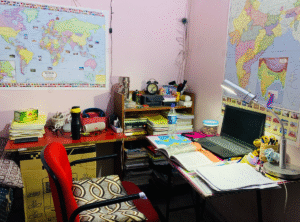

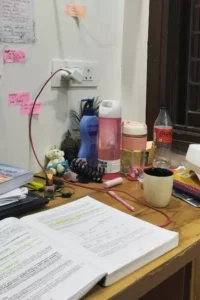
See less